Hotel and restaurant employees in San Pablo often need CPR certification for very different reasons than a Contra Costa College nursing or kinesiology student does, and that difference matters when you’re choosing a course. Hospitality workers typically need general CPR and First Aid training to meet a workplace safety policy, while students in health science or allied-health programs are more often required to complete BLS (Basic Life Support), the American Heart Association course built for clinical settings. Signing up for the wrong one can mean redoing the class later. This guide breaks down which course applies to which situation, what actually happens during training, and how San Pablo residents can fit certification around shift work or a class schedule.
Key Takeaway
Hospitality staff generally need standard CPR and First Aid training, while Contra Costa College students in clinical or health-related programs are more likely to need AHA BLS certification specifically. Checking your program handbook or employer policy before registering is the fastest way to avoid enrolling in the wrong course.
Hospitality Workers: CPR Requirements Usually Come from Employer Policy, Not Law
Most hotels, restaurants, and event venues in San Pablo don’t have a state mandate requiring every employee to hold CPR certification. Instead, the requirement usually comes from the employer directly, often tied to a front-desk safety policy, a food-service liability standard, or a guest-safety program at larger properties.
Because these requirements vary by employer, the course level needed also varies. A front-desk associate or restaurant manager typically only needs general CPR and AED training covering adult, child, and infant response along with choking relief. Kitchen staff and banquet teams are sometimes included under the same policy. If your manager hasn’t specified a certification type, a standard CPR and First Aid course usually satisfies most hospitality workplace policies, but it’s worth confirming directly rather than assuming.
When Contra Costa College Students Actually Need BLS
Health science, nursing, EMT, and kinesiology programs at Contra Costa College commonly require CPR certification before clinical placements or certain coursework begins, and many of these programs specify the AHA BLS Provider course rather than a general certificate. This is because BLS includes team-based resuscitation skills and healthcare-specific scenarios that clinical rotations expect students to already know.
Program requirements differ by department and can change between semesters, so the most reliable step is checking your specific program’s clinical handbook or contacting your advisor before booking a course. Students who complete the wrong certification sometimes find their card isn’t accepted at the start of a clinical rotation, which creates a scheduling problem that’s easy to avoid with one confirmation email.
What Training Actually Covers
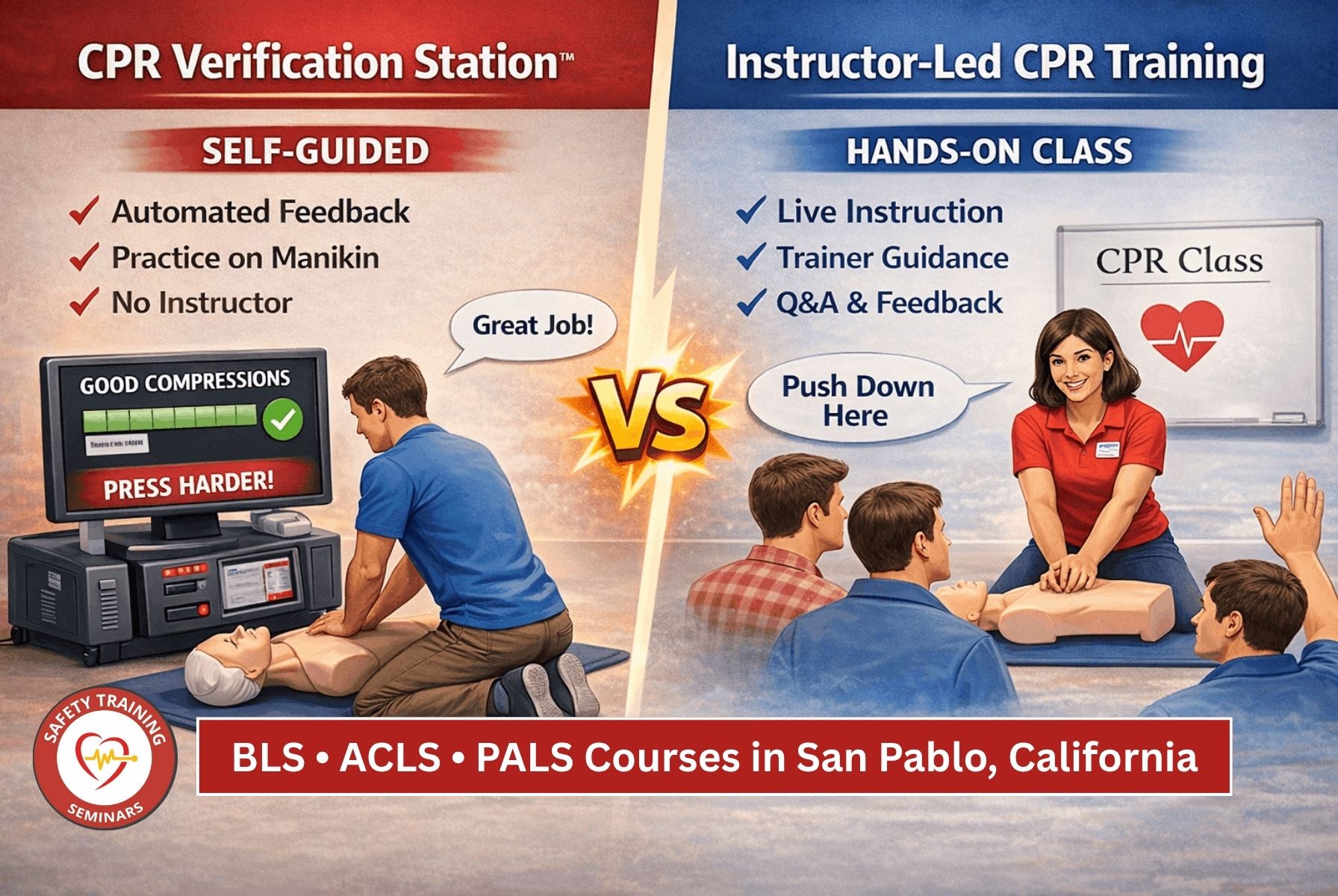
Both BLS and standard CPR courses combine instruction with hands-on skills practice, but the depth and testing format differ.
BLS (healthcare-focused): Covers adult, child, and infant CPR, AED use, airway management, and coordinated response as part of a resuscitation team. Certification requires a supervised skills test where an instructor evaluates your technique directly.
Standard CPR and First Aid: Covers similar CPR and choking-response skills for non-clinical settings, along with basic first aid for common workplace injuries. It’s generally shorter than BLS and doesn’t include the team-response components.
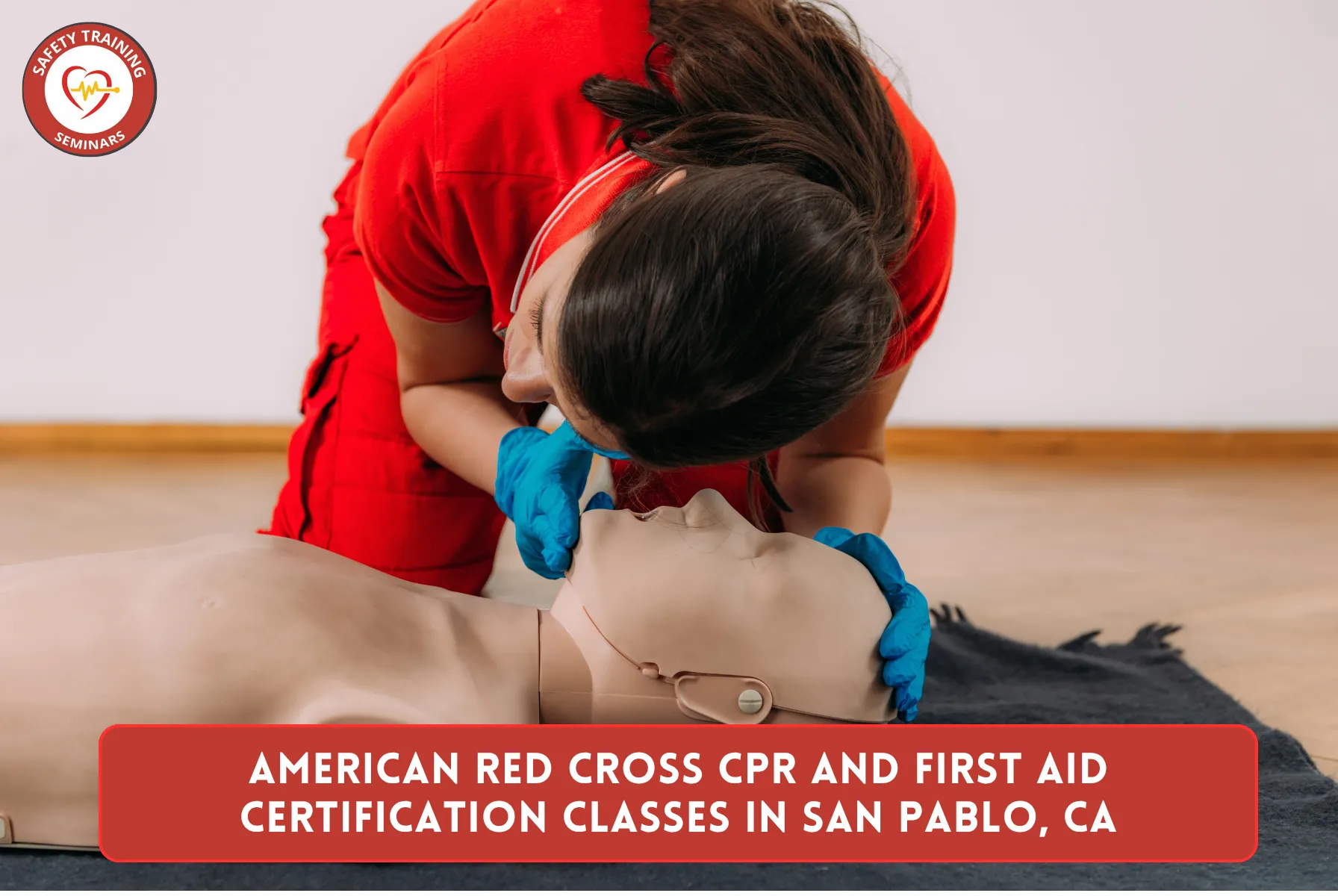
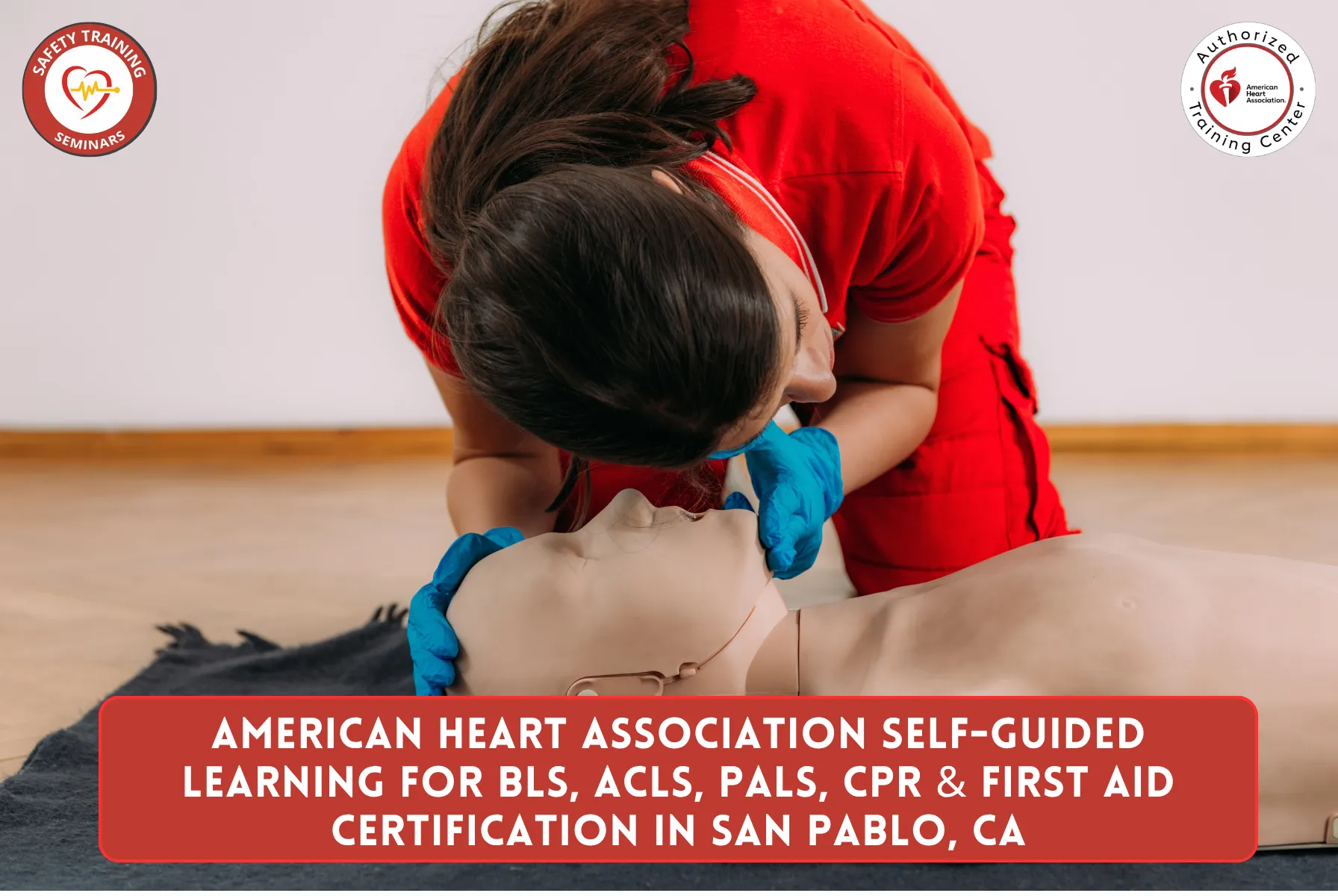
In both cases, expect to practice compressions and rescue breaths on a manikin rather than complete the course entirely through reading or video. An online-only certificate without any in-person or live skills check typically isn’t accepted for BLS purposes, and some employers won’t accept it for general CPR either, so it’s worth checking your program or employer’s specific policy on this point.
Fitting Certification Around Shift Work or a Class Schedule
Hospitality employees working rotating shifts and college students juggling a course load often have similar scheduling constraints: limited blocks of predictable free time.
A blended format, where the classroom or knowledge portion is completed online and only the skills test happens in person, tends to work well for both groups because the in-person commitment is usually shorter than a full classroom course. A traditional in-person class remains a solid option for anyone who prefers finishing everything in one sitting rather than splitting the process across two steps. Either path leads to the same certification once the skills evaluation is complete, so the decision mostly comes down to which format fits your week better.
Training Access Across West Contra Costa County
San Pablo sits within a stretch of West Contra Costa communities where hospitality employment and college enrollment often overlap, particularly for students working part-time in the service industry while completing coursework. Employees and students commuting from El Cerrito, Hercules, or nearby parts of the county frequently look for a class that doesn’t add significant travel time onto an already tight schedule.
Because Contra Costa College draws students from across the broader county, some also prefer scheduling training closer to a work location rather than campus, especially during weeks with heavier coursework. Understanding which certification your specific employer or program requires before you search for a class nearby will save you from comparing options that don’t actually apply to your situation.
Where to Complete BLS or CPR Training Near San Pablo
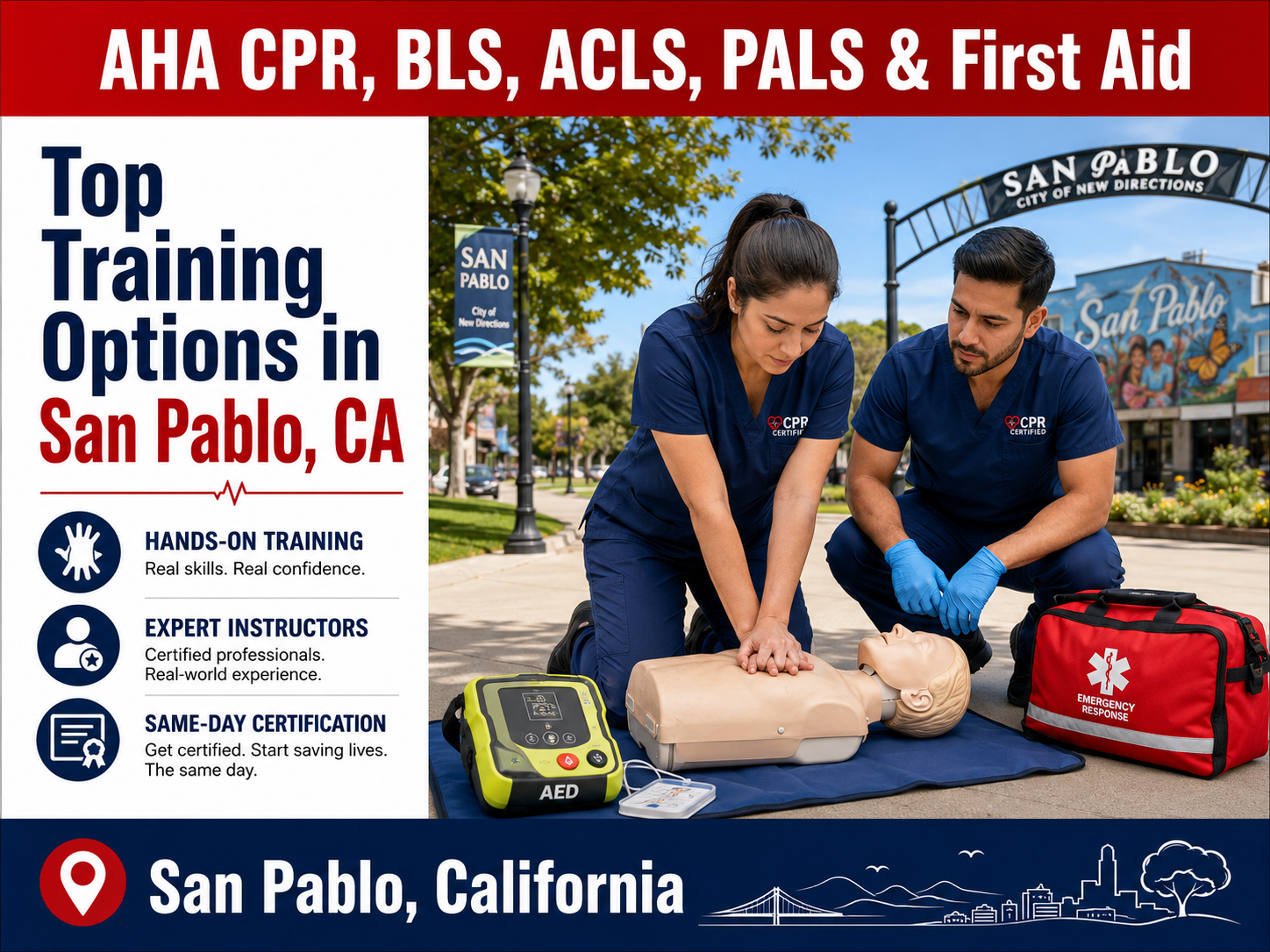
Safety Training Seminars operates a training center in San Pablo, located at 2090 23rd Street, Room 8, San Pablo, CA 94806, offering both BLS certification for healthcare-track students and general CPR and First Aid classes for hospitality and workplace teams. Reviewing which course your program or employer requires before registering helps you book the correct class the first time.
Readers commuting from further into the county may find it easier to review scheduling closer to home or work. The Concord CPR and BLS course page and the Antioch CPR and BLS course page cover nearby scheduling options, and students or employees near Danville can check the Danville CPR and BLS course page for availability in that area. Confirming your required certification type first will make it easier to choose the right page and course format.
Frequently Asked Questions
Do Contra Costa College students need BLS before starting clinical rotations? Many health science and nursing programs require current BLS certification before clinical placements begin, but exact requirements vary by department and can change by semester. Check your program’s clinical handbook or contact your advisor directly to confirm which certification and timeline apply to your specific track.
Is standard CPR certification enough for hospitality jobs in San Pablo? For most front-desk, restaurant, and event-staff roles, standard CPR and First Aid training satisfies typical employer safety policies, since these positions don’t usually require clinical-level BLS. That said, requirements can vary by property or company, so it’s worth confirming with your manager or HR department before enrolling.
Can I complete BLS certification entirely online? Not for most purposes. BLS certification generally requires an in-person or live-supervised skills test where an instructor evaluates your compressions, rescue breaths, and AED use directly. A fully self-paced online course without a supervised skills check typically isn’t accepted for BLS credentialing.
How long does BLS or CPR certification remain valid? AHA BLS certification is generally valid for two years from the date of completion, and standard CPR certifications often follow a similar timeline, though this can vary by course provider. Check your card or confirm with your training center for the exact expiration date tied to your certificate.
Are there CPR and BLS classes available outside San Pablo for students commuting from elsewhere in the county? Yes. Students and hospitality employees commuting from communities like Clayton, Brentwood, or Lafayette often prefer scheduling closer to home or their work shift rather than traveling into San Pablo. Checking nearby course-location pages directly is the most reliable way to confirm current availability in a specific area.
Choosing the Right Course Before You Register
The most useful first step for both hospitality workers and Contra Costa College students is confirming exactly which certification applies to your situation, since BLS and standard CPR aren’t interchangeable for clinical or employer requirements. From there, choosing between an in-person or blended format usually comes down to how your shifts or coursework are scheduled that semester. Safety Training Seminars’ San Pablo location offers both course types, and reviewing the details for your area before booking helps make sure the class you attend is the one your program or employer will actually accept.